
Is Induced Lactation Safe for My Baby?
TL;DR Induced lactation can be safe for babies when it’s thoughtfully planned, medically supervised, and paired with appropriate screening and monitoring. Safety depends on your overall health, any medications or hormones used, infection risk, and how we make sure baby is actually getting enough to grow well. Emotional safety for you matters too. Your mental health and capacity are part of keeping your baby safe.
If you’re thinking about inducing lactation, there’s a good chance this question has been sitting in the back of your mind:
“Is this inducing lactation actually safe for my baby?”
It’s a completely valid question. You’re not just thinking about your own body, you’re thinking about the tiny human who will be drinking your milk, spending time at your chest, and relying on you for comfort and nourishment.
The short answer is: yes, induced lactation can be safe for babies when it’s done thoughtfully and with the right support. But as with most things in infant feeding, the full answer is more nuanced than a simple yes or no.
Let’s break it down.
What Do We Even Mean by “Safe”?
When parents ask, “Is induced lactation safe?” they’re usually asking some combination of:
Is the milk itself safe?
Are the medications or hormones used to induce lactation safe for baby?
Are there infection risks?
Will my baby grow well if I do this?
Those are big questions, and they deserve honest answers.
In this post, we’ll look at each of those areas so you can understand what’s known, where we’re still learning, and how I approach safety with the families I support.
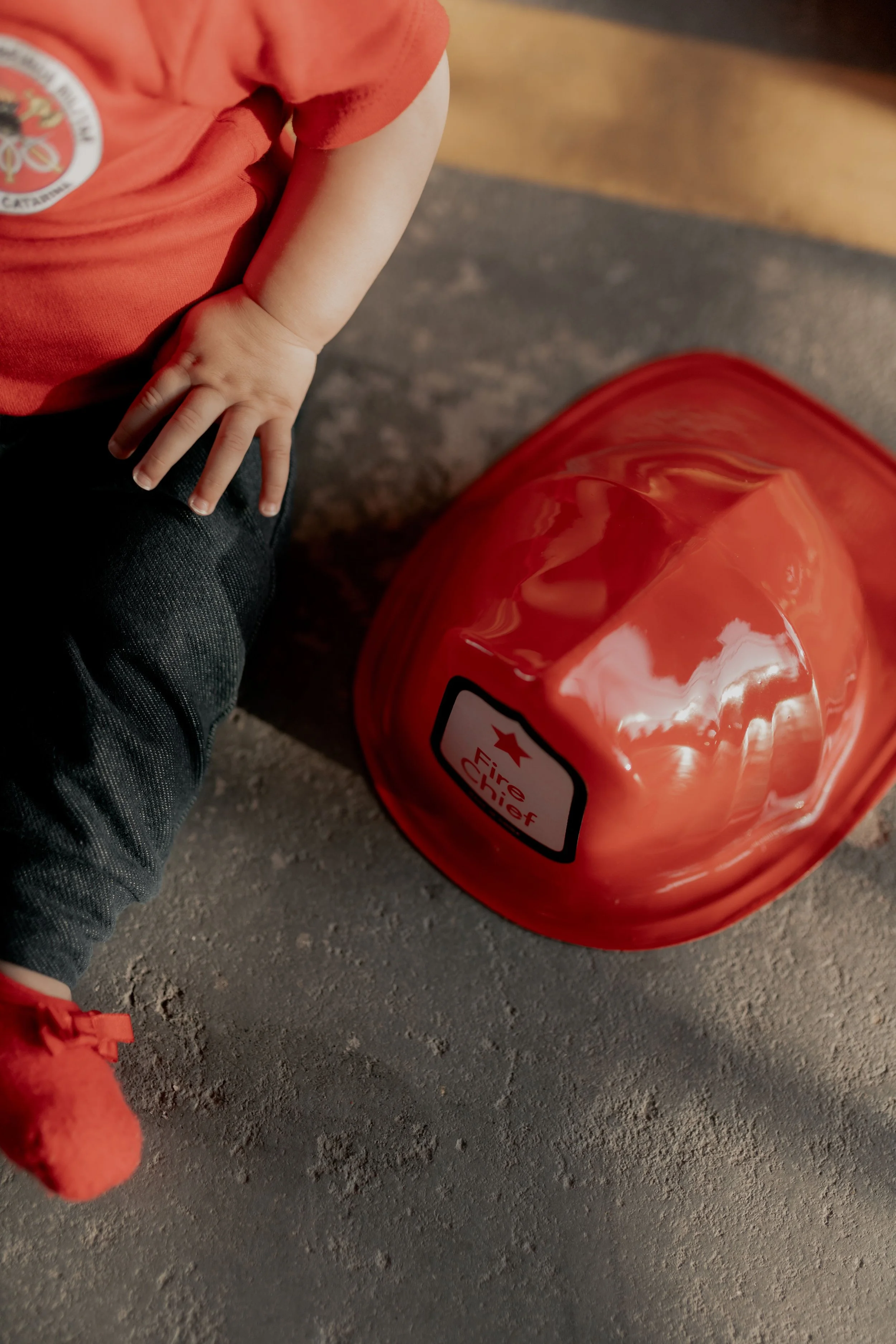
No need to put out fires! Keep safe from the beginning!
Is Milk from Induced Lactation Safe?
Let’s start with the milk itself.
When you induce lactation, your body is still producing human milk. It may not follow exactly the same pattern as milk after pregnancy and birth, but it still contains many of the same:
Antibodies
Immune factors
Hormones and bioactive components
Fats, carbohydrates, and proteins
In other words, it’s not “fake” milk. Your body is doing the real work of lactation.
The safety of that milk for your baby depends mostly on the same things we’d think about for any parent providing their milk:
Your overall health
Any infections or conditions that can be transmitted through milk
Medications or substances you’re taking that might pass into milk
If those factors are appropriately assessed and managed, milk from induced lactation can be a safe, nourishing option for your baby.
Medications and Hormones: Where Safety Needs Extra Care
A lot of the anxiety around induced lactation safety comes from one place:
“If I use medications or hormones to induce lactation, does that make my milk unsafe for my baby?”
Here’s the big picture:
Many induced lactation protocols use medications off-label. This means they weren’t originally designed or approved specifically for starting a milk supply.
These can include hormonal birth control to mimic parts of pregnancy and medications (galactagogues) that increase prolactin and support supply.
The safety picture depends on which medication, what dose, how long, and your personal health history.
Because of this, my approach is:
I do not prescribe medications or herbs.
I do provide education about how these medications are used in lactation, what we know about their transfer into milk, and what the main risks are for the parent.
I always encourage parents to make medication decisions with their physician, not on their own and not based solely on advice from friends or the internet.
In fact, I have a whole separate blog post that dives into medications and galactagogues in more detail (how they work, what the research says about benefits and side effects, and how we decide if they’re a good fit). For now, we won’t dive deep into medications, but I will say:
Most of the significant risks from induced lactation medications are to the parent, not directly to the baby.
That means we’re usually looking at:
How a medication affects your heart, mood, or other systems
How it interacts with other medications you take
How appropriate it is given your personal health history
Your baby’s safety is absolutely part of the discussion, but so is yours.
Infection Screening and Induced Lactation
Another safety question that comes up is:
“Do I need to be tested for anything before I provide milk to my baby?”
For gestational parents, this kind of screening often happens as part of routine prenatal care. For non-gestational parents, it doesn’t always happen automatically, which is why it’s helpful to talk about.
Many hospital based breastfeeding and lactation medicine programs recommend that non-gestational parents who plan to provide their own milk:
Talk with their primary care clinician about which infection screening makes sense for them
Consider testing for conditions that can be transmitted through milk (such as HIV and certain other infections), based on their history and local guidelines
Please note:
Screening is not about policing or judging anyone’s past.
It’s about being able to say, with confidence, “Yes, this milk is safe for my baby,” and about giving your entire care team the information they need to support you fully.
I encourage parents to have an open conversation with their physician about what tests are appropriate for them.
You don’t have to figure that out alone. Your doctor can look at your history and guide you toward the right level of screening.
Is It Safe If My Supply Is Small?
Another angle on safety is about adequacy:
“If I’m inducing lactation and my supply is small, is that unsafe for my baby?”
The answer is: not necessarily. What matters is how we support baby’s intake.
Partial supply is very common in induced lactation and relactation.
Many babies receive a combination of induced milk plus donor milk or formula.
With the right plan, that can be both safe and bonding.
Here’s what we focus on to keep things safe:
At breast supplementation:
Using a supplemental nursing system (SNS) or similar device allows baby to get full feeds at the breast while your supply builds.
Growth monitoring:
Regular weight checks with your baby’s pediatric provider help ensure baby is growing well, regardless of how much milk your body is making.
Diaper counts and behavior:
Wet and dirty diaper patterns, alertness, and feeding cues all give us important information about how your baby is doing.
Safety in this context is not about whether your supply is “enough” by some external standard. It’s about making sure your baby is actually getting enough food, from all sources combined, and that their growth and wellbeing are monitored along the way.

What About Co-Lactation?
If you’re in a family where more than one parent is providing milk (often called co-lactation or co-nursing) you might wonder:
“Is it safe for baby to receive milk from both of us?”
In many cases, yes.
As with any milk provider, we want to:
Review health histories
Consider infection screening
Review medications and chronic conditions
Make sure both parents are supported and monitored appropriately
When that due diligence is in place, co-lactation can be a wonderful, safe way for multiple parents to share in feeding and bonding.
Again, the key is collaboration:
Between each parent and their physician
Between your IBCLC and both parents
Between your family and your baby’s pediatric provider
We’re not just thinking about individual safety in isolation. We’re looking at how all the pieces fit together.
Emotional Safety Counts, Too
One thing I will always bring into a safety conversation (especially around induced lactation) is emotional safety.
Even the most evidence based protocol can become unsafe if:
It pushes your nervous system past its limits
It worsens anxiety or depression
It reinforces feelings of failure or unworthiness
It makes you feel like your worth as a parent depends on milliliters
Your baby needs a nourished caregiver, not a depleted, exhausted one.
So when we ask, “Is induced lactation safe for my baby?” we also need to ask:
Is this plan safe for you?
Does it honor your mental health, trauma history, and capacity?
Does it leave room for joy, attachment, and rest?
Sometimes, the safest thing we can do is simplify a protocol, skip certain medications, or even decide not to pursue induced lactation at all. That’s not failure. It’s wise, protective parenting.
How I Approach Safety With Families
When I work with families considering induced lactation, safety is woven into every step:
We talk about your goals.
Are you hoping for full supply, partial supply, or mainly comfort nursing and bonding?
Safety looks different depending on what we’re aiming for.
We review your health story.
Medical history, surgeries, chronic conditions, medications, and mental health are all part of the picture.
I’ll often suggest questions to bring to your physician so you feel prepared for that conversation.
We discuss medications and herbs in depth.
I explain where they fit (and don’t fit) in induced lactation plans.
If you’re curious about specifics, take a look at my detailed blog on medications and galactagogues and I encourage you to talk through options with your doctor.
We consider infection screening.
I encourage you to ask your physician what screening is appropriate for you if you plan to provide your own milk.
Together, we make sure your whole care team is on the same page.
We build in pediatric follow-up.
We always make a plan for baby’s weight checks and follow-up with their pediatric provider so someone is keeping an eye on growth and wellbeing.
We check in on your nervous system.
We adjust if you’re burning out.
We redefine success if the original goals no longer feel aligned with your health and circumstances.
Safety isn’t a single checkbox, it’s an ongoing process.
So…Is Induced Lactation Safe for My Baby?
When handled with:
Collaboration between you, your IBCLC, and your physicians
Appropriate screening and medication oversight
A clear plan for monitoring baby’s growth and wellbeing
Respect for your mental health and boundaries
…induced lactation can be a safe and meaningful way to feed and connect with your baby.
It’s not the right choice for every family, and that’s okay. But if it’s something you’re considering, you deserve support that looks at safety from every angle.
If you’d like help exploring whether induced lactation is a good fit for you and your baby, I’d love to be a part of your journey. We can look at your unique health story, your adoption, surrogacy, or gestational timeline, and your hopes for feeding and attachment to build a plan that centers safety for both of you.
Key Takeaways
Induced lactation can be safe for babies when it’s planned with medical oversight, appropriate infection screening, and regular monitoring of baby’s growth and wellbeing.
Milk produced through induced lactation is real human milk; safety depends mainly on your health, medications, and transmissible conditions, not on whether you’ve been pregnant.
Most significant risks from induced lactation medications are to the parent, so decisions should always be made with a physician rather than DIY sourcing or social media advice.
Partial supply and co-lactation can both be safe when supplementation and pediatric follow-up ensure baby is getting enough, and all milk providers are appropriately screened.
Emotional safety matters: your mental health, boundaries, and capacity are part of keeping your baby safe, and sometimes simplifying or opting out of a protocol is the wisest choice.
*The information provided on this page is for general educational purposes only and reflects the clinical experience and professional opinion of an International Board Certified Lactation Consultant (IBCLC). It is not a substitute for personalized medical care, diagnosis, or treatment, and does not create a patient–provider relationship. Always consult your own healthcare provider and/or lactation consultant before starting, changing, or stopping any breastfeeding, pumping, or feeding plan. Use of this website and any products purchased is at your own risk. LatchLine makes no guarantees of specific outcomes and disclaims liability for any harm resulting from the use or misuse of the information or products described here, to the fullest extent permitted by law.