
How to Induce Lactation Without Pregnancy: A Full Guide
What induced lactation means
Induced lactation means starting milk production without a recent pregnancy. That is different from relactation, which is rebuilding a milk supply after previously breastfeeding and then stopping.
People who might explore induced lactation include:
Adoptive parents
Intended parents after surrogacy
Non-birthing partners in same-sex relationships
Some trans and non-binary parents
For some families, the goal is a full milk supply. For many, the more realistic goal is a partial supply plus supplementation at the breast. Both are valid.

Don’t expect your milk to pour right away!
Step by step, day by day, your supply will increase.
Hormonal vs non-hormonal approaches
There are two big lanes people usually hear about: hormone based protocols and non-hormonal protocols.
Hormonal approaches
A hormone based plan is usually considered when there is more time to prepare before baby arrives. The general idea is to mimic some of the hormonal changes of pregnancy and then stop those hormones before starting a more intensive pumping routine, which helps signal the body to begin milk production.
In practical terms, this may involve:
Estrogen and/or progesterone for a period of time
Stopping those hormones before the pumping phase begins
In some cases, a physician may also discuss medication to induce lactation or increase prolactin, depending on the parent’s health history and location.
This kind of plan always needs medical oversight. It is not a DIY project.
Non-hormonal approaches
A non-hormonal plan skips the pregnancy mimicking piece and focuses on stimulation, milk removal, and sometimes galactagogues.
This approach is often used when:
There is less time before baby arrives
Hormones are not a good fit medically
A parent needs to keep the plan simple
The focus is on building any milk supply possible rather than following a more intensive full protocol
For many parents, especially those with shorter timelines, this is a very reasonable place to start.
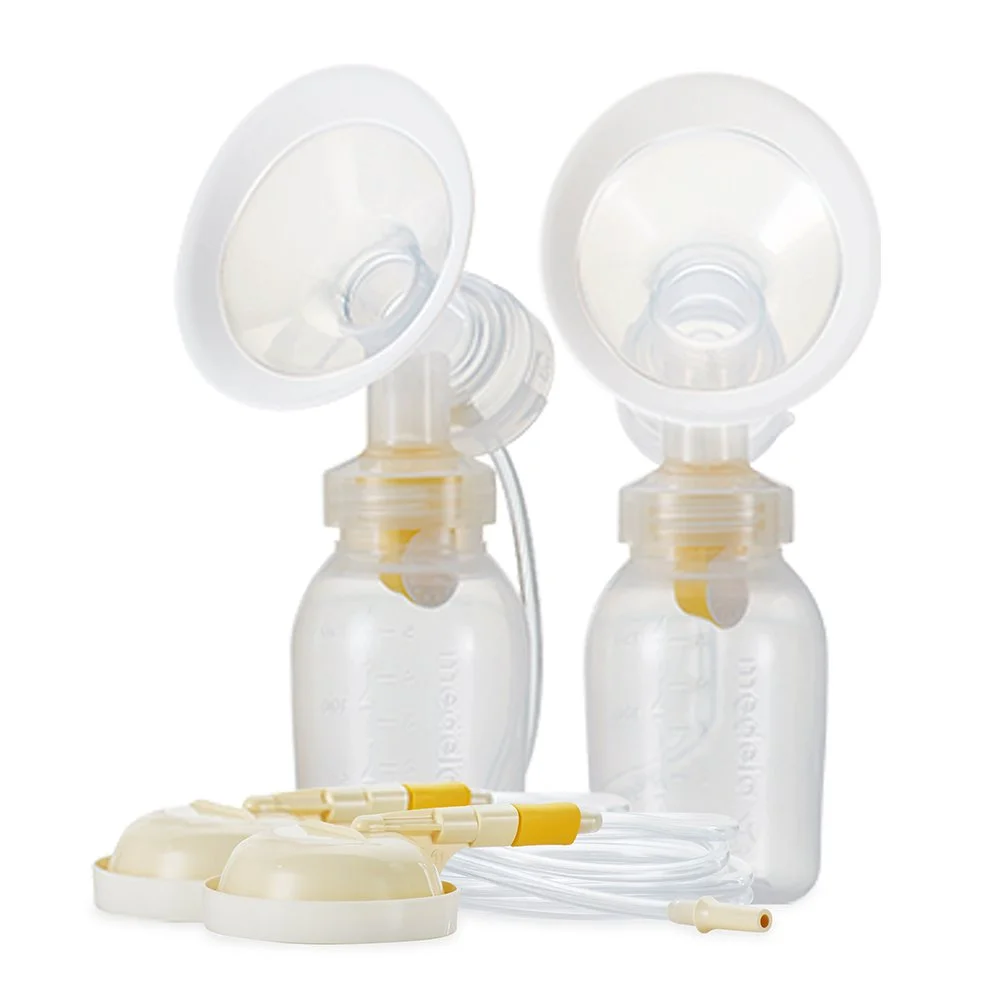
What does pumping usually look like?
This is the part people often underestimate.
If you want to induce breast milk, pumping is usually the backbone of the plan. Even when medications are used, stimulation is still what tells the body to make milk.
Mayo Clinic describes a gradual ramp up when parents have time to prepare: starting with short sessions a few times a day, then building toward pumping every few hours, including at night, and eventually pumping for 15 to 20 minutes every 2 to 3 hours as the baby’s arrival gets closer.
That does not mean every parent needs the exact same schedule. In real life, I like to think about pumping schedules in phases:
Gentle starting phase
This may be where you begin if you are brand new, have a sensitive nervous system, or are still deciding how intensive you want the process to feel.
A gentle start might look like:
5 to 10 minutes, 3 to 4 times a day
Getting used to the pump
Learning flange fit and comfort
Adding hand expression after a session if desired
Building phase
Once pumping feels more routine, many parents increase both frequency and consistency.
This may look like:
Pumping every 4 hours
Then every 3 hours
Adding one overnight session if possible
Pumping 10 to 20 minutes per session
Intensive phase
If your goal is to build as much supply as possible, the schedule often starts to look more like feeding a newborn.
This may look like:
Pumping every 2 to 3 hours
8 to 10 sessions in 24 hours
One overnight pump
Hand expression or breast massage to support removal
That said, the “best” pumping schedule is not the most punishing one. It is the most effective schedule you can actually sustain.

How long does induced lactation take?
This is one of the biggest questions, and the honest answer is: it depends.
Milk production can take weeks to begin. An average timeline is around 4 weeks after starting pumping, though individual experiences vary a lot. Some parents see drops sooner. Others need more time. Some never make a full supply, even with a very strong plan.
A few things that can affect timeline:
Whether you have months to prepare or only days/weeks
Whether you are using a hormone based protocol
How often and effectively milk is being removed
Your medical history and medications
This is why I encourage parents to think in milestones, not deadlines.
For example:
First sensations of fullness
First drops
More regular droplets
Sprays with letdown
Ounces per day
Baby nursing at the breast with or without supplementation
That kind of framework feels much more realistic.
Will you need medication to induce lactation?
Maybe. Maybe not.
Some parents use medication to induce lactation, especially when working with a physician on a formal protocol. Others do not use medication at all. There is no single right answer.
The bigger point is this: medication is never the whole plan. Even when used, it works best alongside regular breast stimulation and milk removal.
If medication is being considered, it should always involve:
A physician who knows your health history.
A clear discussion of risks, benefits, and side effects.
Coordination with your lactation support team.
Medication is not a magic trick. It’s one tool, not the entire toolbox.
What if you only make a partial supply?
Then you have still done something meaningful.
I really want to say that clearly because so many parents go into induced lactation feeling like anything short of exclusive breastfeeding is failure. It is not.
A partial supply still means:
Human milk for your baby
Feeding at the breast/ providing your milk via bottle
Comfort nursing
Skin-to-skin closeness
Shared feeding experiences
A nursing relationship that matters deeply, even if supplementation is part of the picture
Supplemental feedings may still be needed, especially in the early weeks, and supplementers can help keep baby at the breast while protecting stimulation and supply.
There is no prize for suffering through an unrealistic goal. The goal is to build the feeding relationship that works for your family.

Emotional prep matters too
This part gets skipped a lot, and I think that is a mistake.
Induced lactation is not just a pumping plan. It is an emotional experience. It can bring up good feelings of hope, joy, and connection. But, it can also cause feelings of pressure, grief, body distrust, and dysphoria. All of those are valid. So, before you start, I encourage you to ask yourself what your real goal is. Is it a full supply, partial supply, or the nursing relationship? What level of intensity can your mental health support? What will success mean to you if exclusive breastfeeding does not happen? And, who will support you when this feels hard?
These are not side questions. They are central to success and your answers may change throughout your journey.
What kind of support helps most?
Induced lactation usually goes better when you are not trying to invent the whole process alone. I recommend working with a lactation consultant, because protocols often need to be adjusted to the parent, the timeline, and the baby.
Helpful support may include:
An IBCLC ( Internationally Board Certified Lactation Consultant) familiar with induced lactation.
A physician or other medical provider if hormones or medications are being considered.
A pediatric provider once baby arrives
A partner, friend, or close family who can help with logistics and encouragement
A plan for feeding support if baby needs supplementation
This is especially true for non-birthing parents, adoptive families, intended parents after surrogacy, because there are often extra layers of planning, advocacy, and emotional labor involved.
A realistic starting point
If you are feeling overwhelmed, here is a simple place to begin:
Decide what your goal is.
Full supply, partial supply, or nursing relationship first?Get support early.
If possible, connect with an IBCLC before baby arrives.Review your timeline.
Months allows for more options. Weeks or days calls for a simpler plan.Choose your lane.
Hormonal, non-hormonal, or somewhere in between.Start stimulation.
Pumping, hand expression, skin-to-skin, and at breast options all matter.Expect adjustment.
Almost no induced lactation plan stays exactly the same once real life begins.
Closing
If you are hoping to induce lactation and want a plan that is evidence based, realistic, and tailored to your family, that is exactly the kind of support we offer.
In our The LatchLine Exploration program, we build a clear plan together, troubleshoot as we go, and make room for both the practical and emotional parts of the process. For families with a longer runway, more complex planning needs, or wanting more ongoing support our The LatchLine Journey program gives us time to prepare more gradually. Both plans accept HSA/FSA and are available with payment plans.
You do not have to piece this together from Reddit, Facebook, Instagram, and guesswork. You can have support, a plan, and someone in your corner the whole way.
References:
Mayo Clinic Staff. Induced lactation: Can I breastfeed my adopted baby? Mayo Clinic. 2023. Available at: https://www.mayoclinic.org/healthy-lifestyle/infant-and-toddler-health/expert-answers/induced-lactation/faq-20058403. Accessed July 4, 2026.
*The information provided on this page is for general educational purposes only and reflects the clinical experience and professional opinion of an International Board Certified Lactation Consultant (IBCLC). It is not a substitute for personalized medical care, diagnosis, or treatment, and does not create a patient–provider relationship. Always consult your own healthcare provider and/or lactation consultant before starting, changing, or stopping any breastfeeding, pumping, or feeding plan. Use of this website and any products purchased is at your own risk. LatchLine makes no guarantees of specific outcomes and disclaims liability for any harm resulting from the use or misuse of the information described here, to the fullest extent permitted by law.